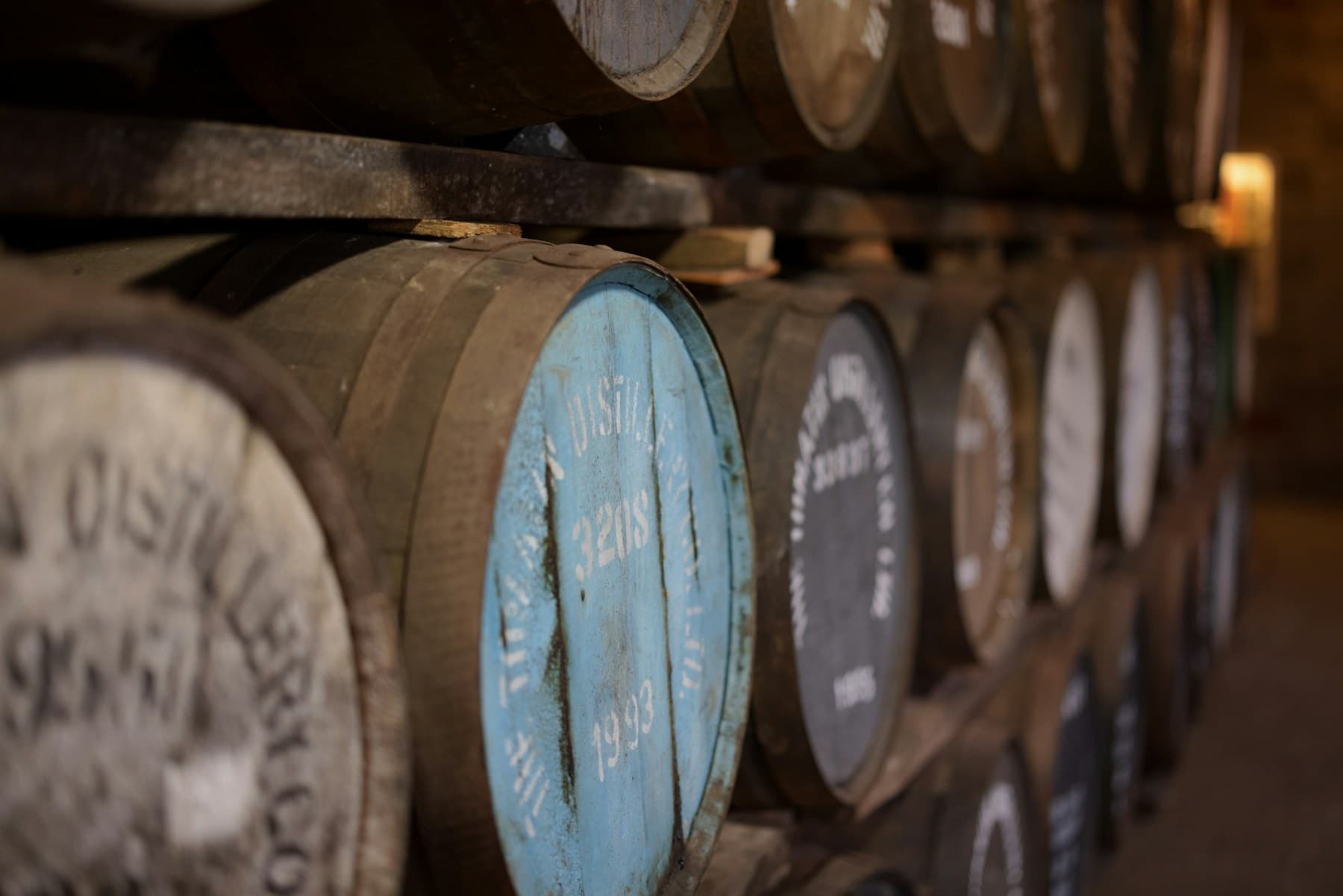
What is a whisky cask share?
A whisky cask share is a clearly defined share of one specific whisky cask. The cask remains in the warehouse during maturation and is bottled later.
 AI-generated
One cask. Your share.
Choose your share quantity. Explore how much it could yield.
0.67%
1 of 150 equal shares. The fraction stays the same while the liquid volume changes.
1 share ≈ 2 bottles after 10 yearsIn this model · 0.7 L per bottle
Illustrative model · 250 L starting volume (hogshead), 150 equal shares, 2% annual volume loss. No dilution or further losses. Bottle equivalents are not an allocation or promised yield.
A share relates to one specific cask
The focus is not just any whisky, but a particular cask. Its origin, distillery, cask type, filling and maturation are part of its own story.
That is why cask shares can differ even when two casks come from the same distillery. Wood and storage shape their character over time.
How cask sharing works
A cask is divided into traceable shares. The public cask page shows the available cask information. Selection and further administration take place in the customer area.
Maturation takes time. Only when a cask is prepared for bottling does its cask story become a specific bottling.
What shapes a cask profile
Cask size, wood type and previous use influence how whisky matures. The warehouse and the duration of storage matter too.
A good cask profile explains these factors clearly. It does not promise the future. It makes origin and maturation easier to understand.
What a share actually represents
A cask share represents a fraction of one particular cask. The terms of the offer and the identity of the cask are essential: a figure such as one of 150 only becomes meaningful when you know which cask it refers to. The cask number connects the offer to its documentation. The distillery’s name alone is not enough, because a distillery fills many casks that can differ substantially in age, previous use and contents.
A share is not initially a finished bottle. During storage, the contents remain in the wood. The eventual bottling yield depends, among other things, on the remaining liquid and the chosen bottling strength. It is equally important to know who arranges bottling and how the bottles are allocated. These details belong in the offer documentation; they cannot be inferred from an attractive cask photograph.
A model calculation: 250 litres, 150 shares, ten years
The following calculation only explains the relationship between cask volume and shares. It does not describe a cask currently on offer or promise a particular number of bottles. We assume a cask with 250 litres of actual initial contents, divide it into 150 equal shares and consider ten further years. Each share initially represents around 1.667 litres. This refers to the actual fill volume, rather than merely the nominal capacity of the empty wooden cask.
For the calculation, we assume an annual volume loss of two per cent. After ten years, 250 × 0.98¹⁰ leaves roughly 204.27 litres, or approximately 1.362 litres per share. Bottled without added water into 0.7-litre bottles, this represents around 292 bottle equivalents for the whole cask, or 1.945 per share. Sampling, transfer and bottling losses have not yet been included. The actual development may differ from this assumption.
The calculated 1.95 bottle equivalents amount to approximately two bottles per share, but do not constitute a promise of two whole bottles. The offer must explain how whole bottles are allocated, any minimum share quantity required for allocation and how remaining liquid is handled. Ten shares would represent around 13.62 litres, or 19.45 bottle equivalents before further losses. The actual distribution also needs to be agreed before you make your selection.
Why bottling strength changes the bottle count
Litres of liquid and litres of pure alcohol are different quantities. For example, 204.27 litres at a measured 55% ABV contain approximately 112.35 litres of pure alcohol. Diluting this to 46% ABV would theoretically produce around 244.23 litres. Dividing by 0.7 litres gives roughly 349 bottle equivalents before bottling losses. This is a simplified volume calculation; the bottler handles the practical measurement and adjustment of strength.
More bottles do not mean more whisky from the wood. The additional liquid comes from the water added. Bottle size and alcoholic strength must therefore be known to compare two figures meaningfully. A statement such as approximately two bottles per share is incomplete without them. Reliable planning also requires a recent measurement of the contents and its date, rather than just the figures recorded at the original filling.
Price per share and costs up to the finished bottle
Costs can also be explained using explicitly fictional figures. At €60 per share, ten shares would initially cost €600. If a further €20 per share were assumed for later processing in this example, another €200 would be added, bringing the total to €800. These are invented examples, not Angels’ Share’s fee schedule or an offer from a partner. Other costs are not included in this model calculation.
For a real cask, check the published amounts instead. What storage period is included, how is insurance handled, and what is charged for bottling, bottles, closures, labels, shipping and administration? Each item should clearly state whether it is included in the displayed price, payable later or still to be determined. The share price alone does not explain the full cost of reaching a delivered bottle. The terms for the particular cask are what matter.
Ten years in a model is not a bottling date
The ten years in our example run from an assumed starting point. They are neither a general minimum holding period nor a promise about when a particular whisky will be mature. A cask already stored for several years has a different starting point from freshly filled new make spirit. Ask about the filling date, storage so far and the intended next steps. The age shown on a cask card is not the same as a promised remaining wait until bottling.
The right moment to bottle also depends on the whisky’s sensory development. Wood contributes more than colour: it changes the interaction of aromas and texture. A sensible process includes tasting samples and updating measurements. The offer should explain who makes the decision, how participants are informed and how changes to the timetable are handled. Age alone cannot establish either flavour or a reliable bottling date.
Read the documents before choosing
Start with the cask number and compare it across the offer and documentation. Then check the distillery, region, filling date, cask type and previous contents. Next, look for the current volume, measured alcoholic strength and date of the last measurement. Where information is missing, a specific question is more useful than an estimate based on other casks from the same distillery. It should also be clear whether a particular warehouse is identified or the storage location remains unspecified.
Finally, compare the total number of shares with the quantity you want and the proposed bottling arrangement. Note which costs are already known and who is responsible for the next steps. This turns the general idea of a cask share into something you can understand: an identified cask, a defined fraction, documented maturation and a clear route to bottling. The current catalogue is a useful starting point, but its information does not replace any missing agreement about quantities or fees.
Journal
Continue the cask story.
Three carefully chosen reads that add the next useful chapter.
Frequently asked questions
- What is a whisky cask share?
- A whisky cask share is a clearly defined share of one specific whisky cask. The cask matures in a warehouse and is bottled later.
- What makes cask shares different?
- They relate to specific casks. Distillery, wood, previous use, filling and maturation shape each individual cask profile.
- Where can I find information about a cask?
- The public cask page shows the available information. Selection and administration take place in the customer area.